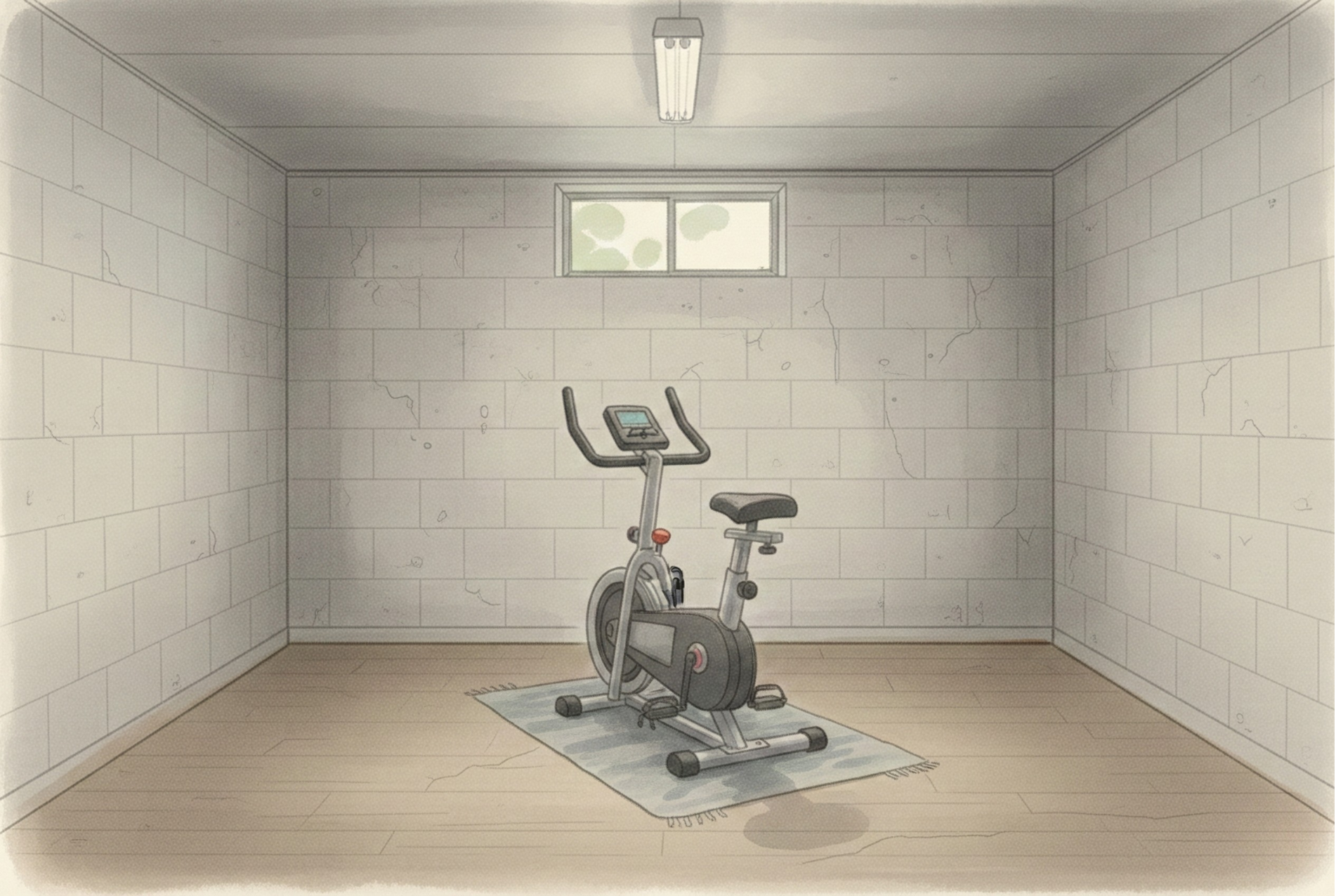
Cycling is one of the most recommended exercises for knee arthritis, yet many people can’t do it comfortably because their knee won’t bend far enough to pedal.
The Best Stationary Bike for Treating Knee Arthritis at Home
If you’ve searched for ways to ease knee arthritis symptoms at home, you’ve probably come across the recommendation: stationary cycling. Many orthopedic doctors and physical therapists like Alyssa Kuhn, David Middaugh, Dr. Jeffrey Peng, and Doug Weiss say that cycling is a good low-impact therapeutic exercise for arthritic knees.
The Arthritis Foundation reinforces this guidance as well. In an article by Sharon Liao, physical therapist Jessica Schwartz, DPT, explains:
“Stationary biking is an ideal low-impact exercise for people with arthritis,” says physical therapist Jessica Schwartz, founder of PT2Go in New York City and a spokesperson for the American Physical Therapy Association.
“…It’s also safe and convenient...You can also add resistance slowly, so you can gradually build up your strength,.”
Biking moves your joints through their range of motion and encourages the production of synovial fluid, which lubricates them. It also strengthens the muscles that support the knee, helping relieve pressure on the joint.
That’s why riding regularly can help you move easier. According to a 2021 review published in Clinical Rehabilitation, exercising on stationary bikes lessened pain and improved function in people with knee osteoarthritis (OA). Another study found that people with rheumatoid arthritis who trained on indoor bikes as part of a workout program strengthened their muscles and reduced disease activity after six months.
These professionals understand the value of cycling in addition to the other standard PT exercises for rehabbing an arthritic knee.
The Problem: But What If My Knee Won’t Bend Enough to Pedal Without Pain?
They always answer that question: If your knee won’t bend enough to take the pedals on a conventional bike all the way around with little pain, you have to stop. You can’t go there.
That’s where they leave it and offer you no alternative. But isn’t that a bit frustrating?
- You’re told cycling is one of the best exercises
- But a conventional bike requires more knee bend than you currently have
- So you can’t do the very exercise that is supposed to be good for your knee
Maybe you used to cycle but had to stop because of the pain and would love to be able to start again.
You understand its value but you can’t do it. Do you feel stuck?
Fortunately, there is a simple mechanical reason this happens… and an even simpler solution.
A Simple Adjustment Makes Cycling Available to More People
The pedal cranks on most stationary bikes are around 7” long. These cranks create a large pedaling circle that demands a deep knee bend to be able to go all the way around. If your knee won’t bend enough, it hurts and you can’t go past the top of the circle.
But if the pedal cranks are shorter, the pedaling circle becomes smaller—and the amount of knee bend required to complete a rotation drops dramatically.
This is where OrthoBike differs from conventional bikes.
How OrthoBike Makes Pain-Free Cycling Possible Regardless of Your Maximum Knee Bend
- Adjustable pedal crank lengths
Making the cranks shorter - even down to 2”! - allows you to cycle in a smaller, pain-free range of motion.
- Adjustable seat positioning
The seat position combines with the adjustable pedal cranks to limit cycling flexion to or below your maximum pain-free knee bend, and allows incremental, controlled increases.
- Ability to pedal forward and backward
Backward pedaling is an important part of cycling exercise that you can’t get with a conventional stationary bike. It works the same muscles in different patterns.
Ryan G., a physical therapist who began using OrthoBike in 2013, explains:
“OrthoBike is of great value to osteoarthritic patients...we know the value of movement…OrthoBike’s adjustable pedals and seat allow for a very short arc of range of motion, and the thousands of repetitions they get from cycling are very beneficial to get the nutrients to the joint surface and tissues surrounding.”
OrthoBike doesn’t change the principles of good rehab—it simply makes a highly recommended arthritis exercise more accessible.
Reminder: Why Cycling Matters So Much for Arthritic Knees
When cycling is comfortable enough to do regularly, it supports knee health in several important ways:
- Moves the joint without harsh impact
- Encourages synovial fluid lubrication
- Warms and loosens stiff tissues
- Strengthens supportive muscles over time
- Helps maintain or increase range of motion
- Can reduce pain during and after movement
With consistent, comfortable pedaling, these benefits accumulate week after week.
That’s why making it possible to cycle—regardless of your current knee bend—is so important.
You can see that the medical professionals just don’t know about short cranks and OrthoBike and how it extends the benefits of cycling to people with limited range of motion. Once you know, it seems so simple.
The Bottom Line
Cycling is one of the most widely recommended exercises for knee arthritis, but many people are unable to do it on a standard bike because of limited or painful knee bend.
The OrthoBike Hero™ provides an alternative by allowing you to cycle pain-free within your current, range of motion, making consistent, low-impact exercise possible at home.
Ready to Ride?
Contact us to learn more about OrthoBike HERO and how it can speed your recovery →