Cycling therapy using the OrthoBike stretches arthrofibrotic knees differently than braces/splints, high-intensity stretching equipment, or hands-on PT. This post explains dynamic vs static stretching, and why a pain-free, repetitive dynamic stretch may be the reason for the successful rehabilitations of arthrofibrotic knees the clinicians and I have seen.
This is the second of a series of posts explaining the science and application of cycling therapy with short- and variable-length pedal cranks to rehabilitation of knees with arthrofibrosis. I recommend that you read the first post, which sets the stage for this discussion of stretching types and protocols (→ Post 1, "Dynamic Stretching Below 60° Flexion: The Science of a Cycling Alternative for Knee Arthrofibrosis").
Dynamic vs Static Stretching for Knee Arthrofibrosis
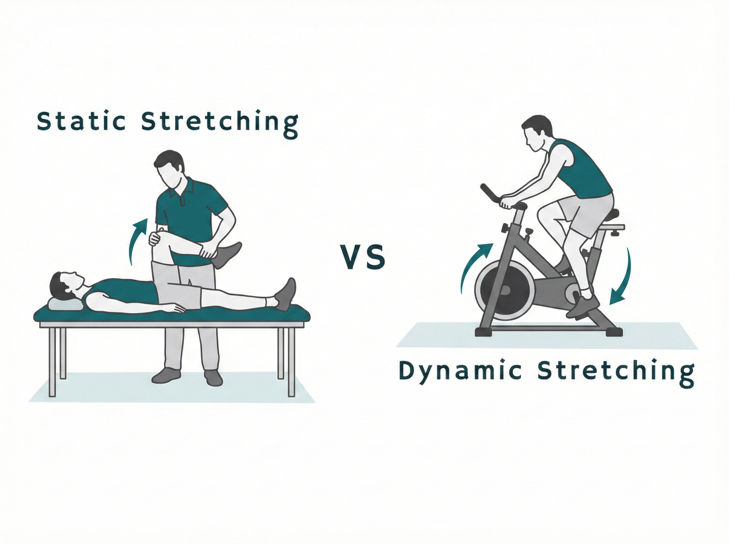
First, let's discuss how dynamic stretching by OrthoBike cycling therapy works compared with static stretching devices and techniques. This may be the the first time you have heard about “dynamic stretching” in cycling to increase knee flexion.
Static stretching
Static stretching is the common tool applied by PTs’ hands and equipment. It requires a prolonged stretch without motion, and can be applied once to several times per day. (Users are recommended to take pain meds first.)
A variety of methods and devices facilitate static stretching, and they will be familiar to anyone who has rehabbed a knee: low intensity devices like braces/splints, high intensity devices, and manual stretching by a physical therapist.
These devices and techniques move the lower leg a very short distance into the knee’s stretch zone and hold it in place for a shorter or longer duration, depending on the intensity (i.e., resultant pain) of the applied force.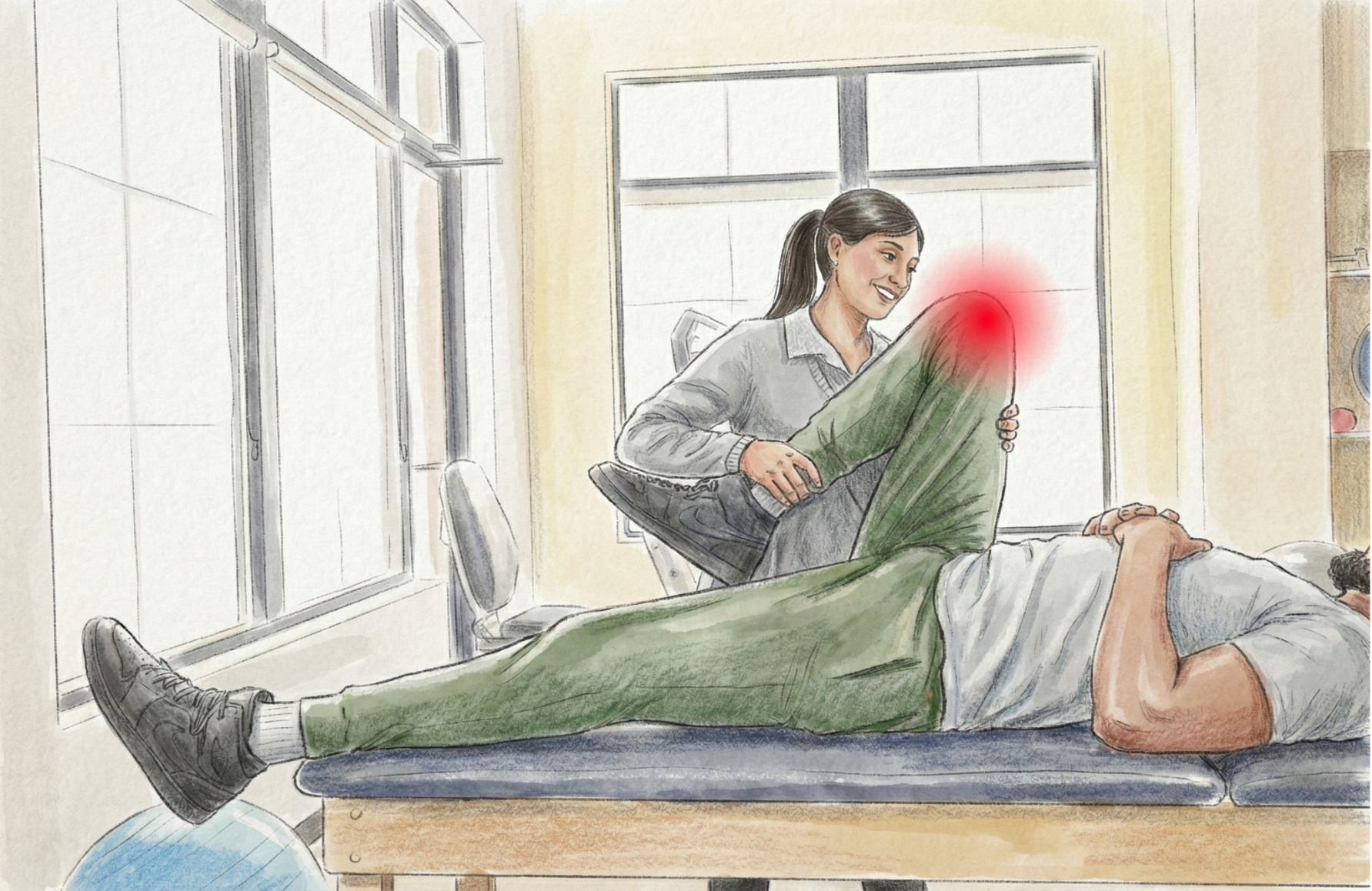
An image of a physical therapist performing a manual knee stretch on a patient.
Dynamic Stretching
Dynamic stretching to improve a joint's range of motion requires repetitive motion which is only possible by using machines.
Any machine - like an exercise bike - that moves the legs in a rotating or back-and-forth pattern can provide dynamic stretching, depending on the circumstances.
When we ride a bike,
-
the pedal engages the knee in repetitive motion. Every time it rotates closest to the rider, it forces the knee into and through its maximum flexion angle;
-
then the pedal allows the knee to relax out of flexion as it rotates to the furthest point away and moves the knee into and through maximum extension angle.
Dynamic stretching by pedaling is primarily motion with short, intermittent stretching moments, repeated thousands of times.
The practical difference for arthrofibrosis rehab
Static stretching = longer holds, fewer reps, pain and guarding
Dynamic stretching = brief end-range moments, thousands of reps, pain-free and no guarding
OrthoBike extends the benefits of dynamic stretching to knees with between 60-85° maximum flexion. On the other hand, conventional stationary bikes with fixed pedal cranks require a minimum of 105° flexion for pain-free cycling.
Note: PTs and doctors who work with arthrofibrosis patients recommend low-load prolonged stretching (LLPS) and gentle cycling where possible (see two references below). They do not recommend high-intensity stretching (HIS) for arthrofibrotic knees, although there are studies and products that advocate it.
Bottom line: Stiff knees need dynamic stretching
If you have knee arthrofibrosis, brute force static stretching is painful and may not fully restore your range of motion.
The alternative for limited flexion is dynamic stretching on OrthoBike.
Contact us to learn more about OrthoBike HERO or to reserve one for home use →
Click here for a technical review of the science behind OrthoBike.
Nothing in these posts is intended as medical advice or as a guarantee of any level or kind of outcome. The science of cycling in therapy and high- and low-intensity stretching is established. The physiological and psychological conditions of people vary. Consult with your medical care team.